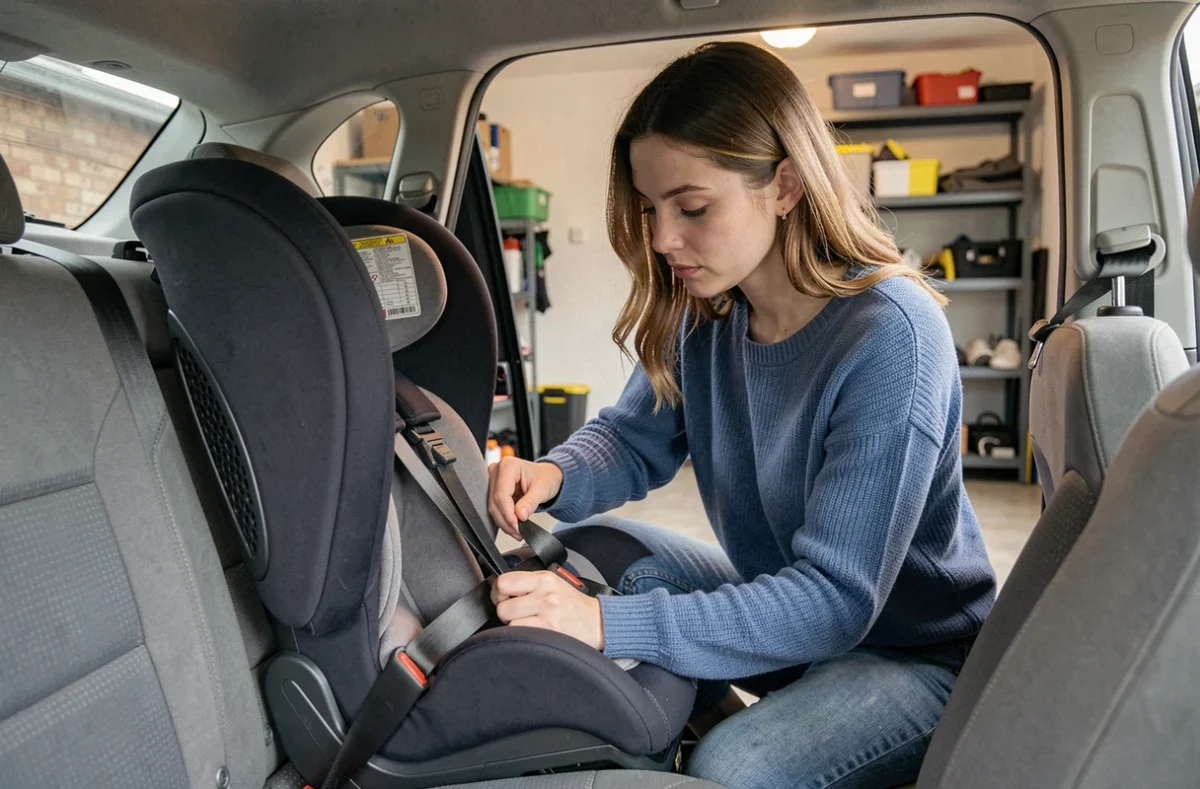
Let’s study the Nania Group 1 2 3 car seat, a child safety artifact with distinctive features and considerable advantages. Before starting its installation, careful preparation is essential, including deciphering the instruction manual and examining the vehicle. The installation follows specific phases: positioning, Isofix anchoring, attaching the top tether, and adjusting the belts. For flawless fixation, ensure even tension on the straps and the absence of twists. After installation, a thorough check is necessary: stability of the seat, proper adjustment of the belts, and comfort for the child. This process guarantees optimal protection during your travels.
Decoding the Nania Group 1 2 3 car seat: specifications and advantages
The Nania Group 1 2 3 car seat is a benchmark in child safety. Designed with an ergonomic design and equipped with the latest technologies, this model promises a perfect child safety. A remarkable strength of this device lies in its ability to grow with the child. Indeed, it adapts to different age groups ranging from group 1 (9-18 kg), to group 2 (15-25 kg) up to group 3 (22-36 kg). This adaptability ensures not only the longevity of the product but also saves on the purchase of a new seat at each stage of the child’s growth.
Another striking feature concerns the level of comfort it offers. The plush and generous padding guarantees optimum well-being even during long car trips. Additionally, the adjustable headrest enhances this maximized comfort experience. The installation of the seat is simplified thanks to its Isofix system, which, combined with a top tether, makes the assembly quick and safe.
In the perspective of optimal protection during road trips, this model integrates a sturdy structure that effectively absorbs side impacts. This performance makes it a preferred choice for parents who prioritize the best possible safety for their offspring.
The integrated five-point harness also significantly contributes to the safety process implemented by Nania for its car seats.
Preliminary preparation: elements to consider before installation
One of the critical aspects, often overlooked before installing any software or hardware, is the initial preparation. This is a crucial step that must not be ignored. It involves gathering all necessary information and planning properly to avoid any potential complications during the installation process.
Initial preparation typically involves a precise understanding of hardware and software requirements. If you are installing new software on your computer, for example, it is imperative to check that your system has enough resources (RAM, disk space) to accommodate and run the new software effectively. Similarly, if you are setting up new equipment in an industrial environment, you need to confirm that your facilities can support this new addition without compromising overall safety or efficiency.
You should also consider the compatibilities between existing systems and new elements being introduced. For example, some software may not work correctly with certain versions of a given operating system; such incompatibility could cause serious malfunctions or even render the entire system unusable.
Beyond pure technical needs, some other elements should also be integrated into the initial preparation.
Detailed installation process for the Nania Group 1 2 3 car seat
The safety of little ones is paramount and particularly involves the proper installation of a car seat, especially the Nania Group 1 2. A correct assembly ensures that your child is well protected during your road trips.
Preparation: Before starting, make sure you have carefully read the product manual that comes with the seat. If you no longer have it available, it can easily be found online.
Purchase: Ensure that it is the version suitable for the size and weight of your baby or young child according to the ECE R44 standards. Group 1 concerns children between 9 and 18 kg (from about one year), group 2 for those weighing between 15 and 25 kg (from four to six years), while group 3 accommodates children up to 36 kg, around ten years old.
Installation of the seat: Always place this type of seat in the opposite direction of travel. That is, facing the rear of the vehicle when possible, then forward-facing according to age/weight. It must be securely fastened with the vehicle’s three-point seatbelt, strictly following the red or blue guides indicated on it corresponding to rear or forward-facing positions.
Straps: To ensure optimal support, do not hesitate to tighten the straps around your little passenger as much as possible once they are seated in their chair, without compressing them.
Tips for optimal and safe fixation of your car seat
Securing your child’s car seat is essential to minimize risks in case of an accident. Be sure to ensure the optimal safety of your little passenger.
The first step is to select a seat suitable for your child’s weight and age. Some parents tend to prioritize seats that seem more comfortable or stylish, but it is important to keep in mind that each category of seats corresponds to a specific age group and complies with different regulations.
The location of the seat is also crucial. The rear-facing position is recommended until at least two years old, as it offers better protection for the neck and spine in the event of a frontal collision, which are the most common accidents on our roads. Beyond that, it will mainly depend on the type of seat chosen.
The third important point concerns the correct use of Isofix attachments. These fixings allow for simple and quick installation while ensuring perfect stability of the seat in the vehicle. Make sure that the Isofix anchorage points are well locked when installing the car seat.
Once you have correctly installed the device in the car, always check the tension of the straps; they should not be too tight or too loose: you should just be able to pass two fingers between the child and their straps.
Post-installation verification steps: ensuring your child’s safety
After installing the safety equipment for your child in their room, it is essential to perform certain checks to ensure optimal protection. Ensure that all equipment is properly secured and stable. If you have assembled a crib or playpen, gently shake them to check their sturdiness. Similarly, if furniture has been anchored to the wall to prevent it from falling on the child in case of a shock, test their resistance.
Also check that your installations comply with the recommended safety standards. For example, the space between the crib slats should not exceed 6 centimeters to prevent the baby’s head from getting stuck. Toys should also be suitable for the child’s age and motor skills: no small detachable elements that could be ingested are allowed.
You must regularly inspect all these devices. An object can break or detach for no apparent reason and then pose a potentially dangerous risk to your child.