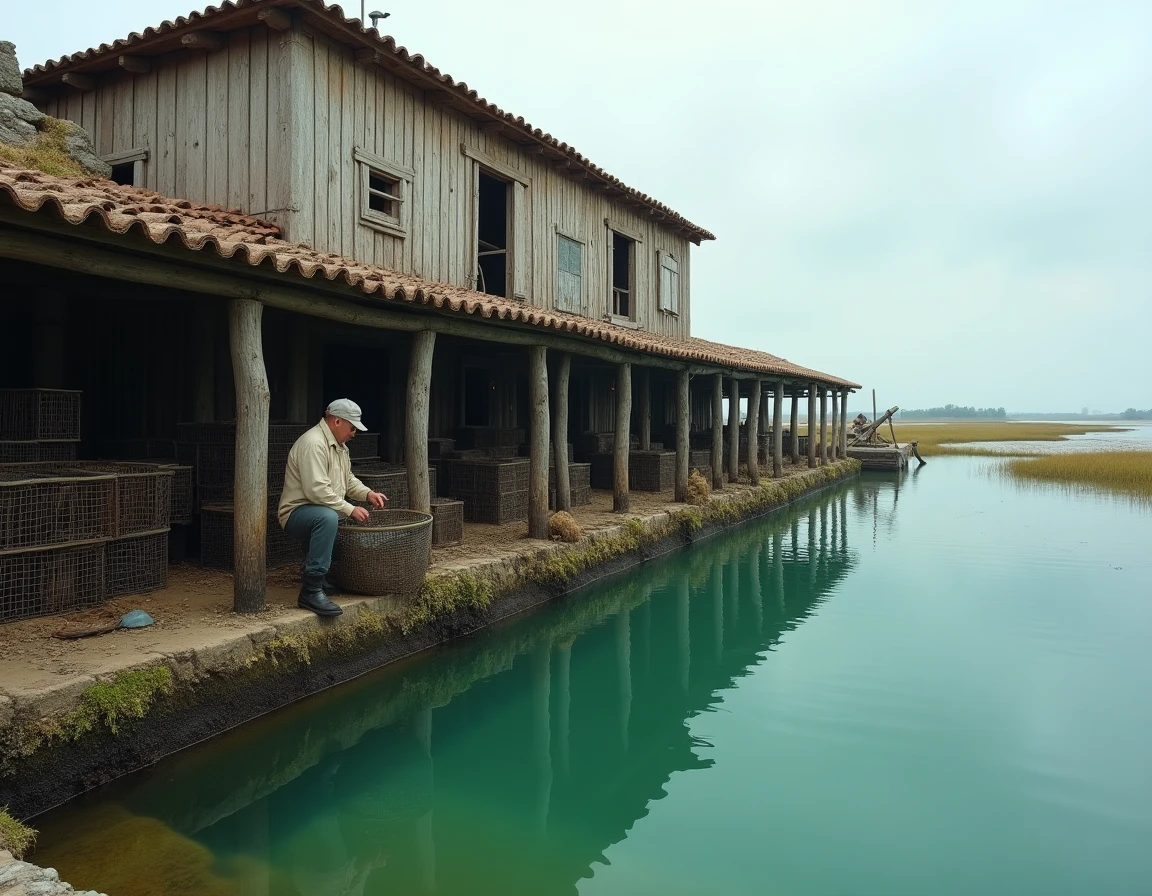
The oyster farm in Demain nous appartient is one of the most sought-after locations by fans of the series. Many viewers try to locate this building on a map, hoping to visit it during a stay in Sète or around the Thau lagoon. The problem is that this farm does not exist as a real visitable place.
Studio set or real landscape: what the screen really shows
You may have noticed, while watching the scenes of the farm, that the lighting changes depending on the shots? A wide shot shows the lagoon, the oyster tables, the sky of the Thau lagoon. The next shot frames the interior of the building, with more uniform lighting. This visual discrepancy reveals a montage between two types of footage.
The building of the oyster farm is a set built in a studio. The interior scenes, dialogues, and confrontations between characters are filmed in the series’ studios located in Sète, in a former wine warehouse converted into a production set. The walls, furniture, and oyster crates seen on screen are set elements constructed by the series’ teams.
The exterior shots, on the other hand, are filmed around the Thau lagoon. It is this combination that gives the farm its realism: the lagoon, the oyster parks, and the Mediterranean vegetation do indeed exist. Identifying the shooting location of the oyster farm requires distinguishing these two layers of images, which the editing deliberately makes transparent.
Visual clues to differentiate studio and Thau lagoon
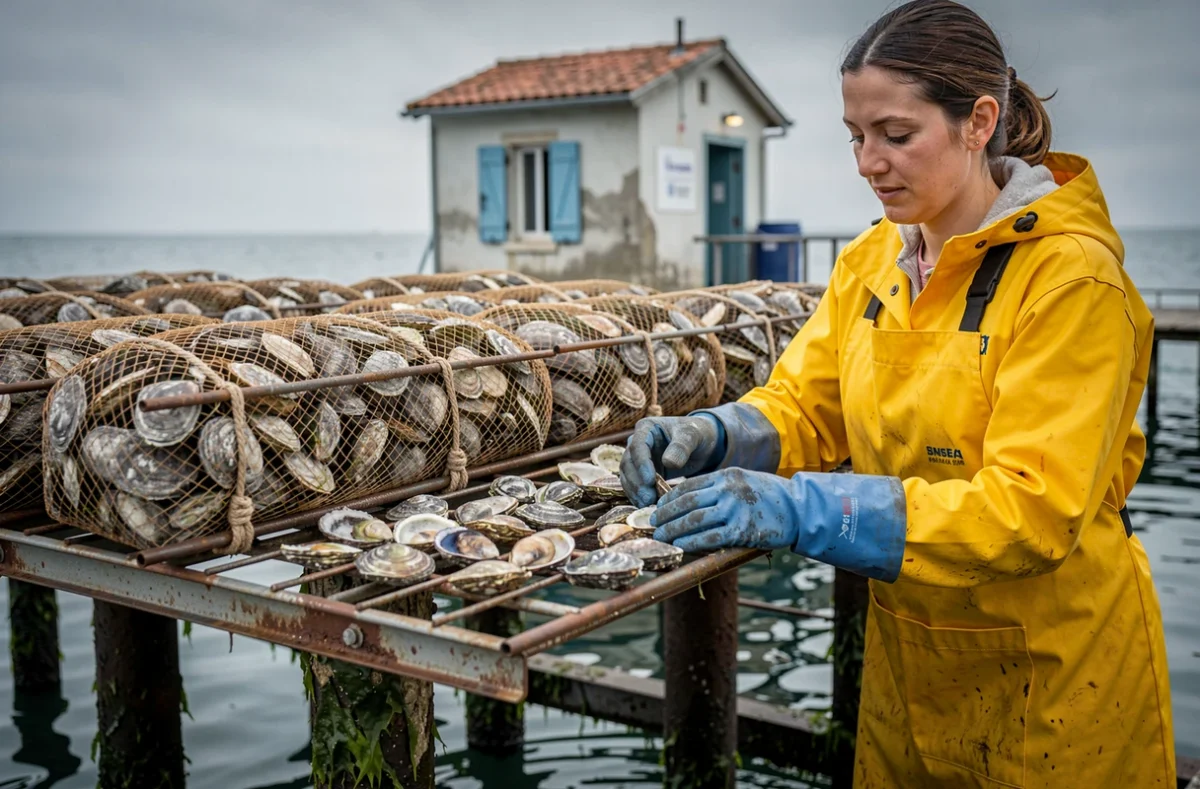
Some markers help to differentiate things when watching an episode.
Depth of field
The outdoor shots offer a natural depth of field. The lagoon, the shellfish farming installations in the distance, and sometimes the hills of Bouzigues or Loupian are clearly distinguishable. In the studio, the background is either blurred or absent: the camera stays tight on the characters.
Light and shadows
The natural light of the Thau lagoon is very recognizable. It produces reflections on the water, marked shadows, and a warm hue at the end of the day. In the studio, the lighting is controlled and constant. If a scene transitions from a sunlit exterior to an interior without a change in light, the cut signals a change of filming location.
Ambient sounds
This point is less obvious, but outdoor scenes often include sounds of wind, water, or birds captured on site. The interior scenes of the farm are post-synchronized, with a duller acoustics. The transition from one to the other, sometimes within the same sequence, confirms that two distinct spaces are assembled in editing.
Why the oyster farm in DNA doesn’t have a postal address
The confusion arises from the fact that the series anchors its narrative in real locations in Sète and its surroundings. The Spoon, Chloé’s house, the downtown quay physically exist. Fans can visit them and recognize the facades. The oyster farm operates differently.
No shellfish farming operation in the Thau lagoon serves as a permanent set for the series. The building visible on screen is a studio construction. The landscapes surrounding it come from shots filmed at various locations around the lagoon, without a fixed address. Looking for the farm in Loupian, Bouzigues, or Marseillan is akin to confusing the interior set with the locations used for the exterior views.
The farm does not have a unique address because it is not a real building. It is a combination of studio and landscapes. This distinction is useful to avoid ending up in front of a private oyster farming operation that has no connection to the production.
Sets of Demain nous appartient: what can be visited and what cannot
For fans planning a visit to Sète, here’s what to remember about the accessibility of the filming locations:
- The outdoor shots of the city (quays, streets of the upper district, beach) are public places accessible freely. The series’ sets are easily recognizable there.
- Some houses used for the facades (Chloé’s house, the Beddiar house) are private residences. They can be seen from the street, but not entered.
- The interior sets, including the oyster farm, the police station, and the apartments, are built in the production studios. These studios are not open to the public.
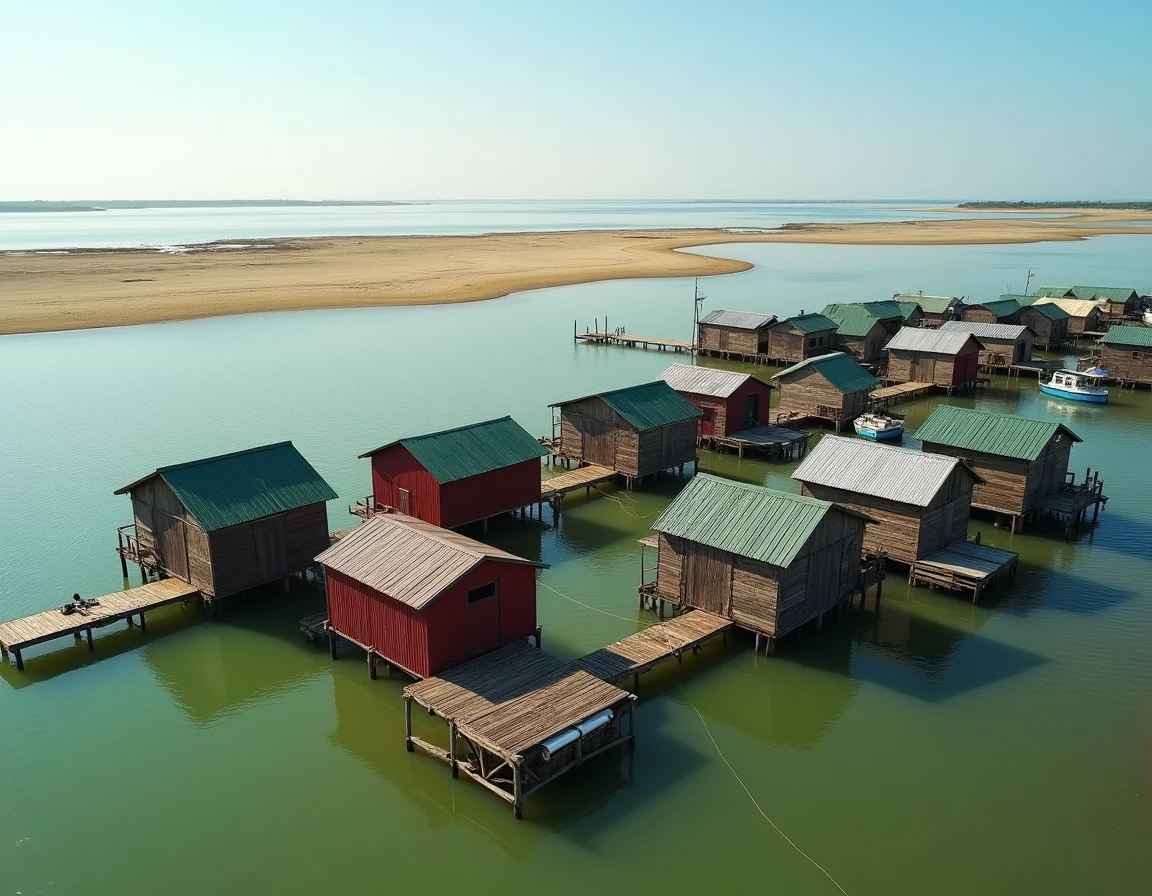
The Thau lagoon remains a destination in its own right, independent of the series. The municipalities of Bouzigues, Mèze, or Marseillan offer visits to authentic oyster farming operations, with tastings. These addresses have nothing to do with the DNA set, but they allow visitors to experience the landscapes that the series uses as a backdrop.
Sète and the Thau lagoon beyond the filming of DNA
The series has given considerable visibility to Sète and its surroundings. Tourism related to DNA exists, with organized tours in the city to spot the filming locations. These tours focus on the real exteriors: facades, squares, waterfront.
The oyster farm remains a fictional set, not a tourist stop. The richness of the Thau lagoon lies in its landscapes, its shellfish farming tradition, and its villages. Confusing them with a filming set deprives the visitor of what truly makes the region interesting.
Before planning a detour to a location seen in the series, checking whether it is an exterior filmed on site or a studio set avoids disappointment. For the farm, the answer is clear: the building is fictional, only the surrounding landscape is real.