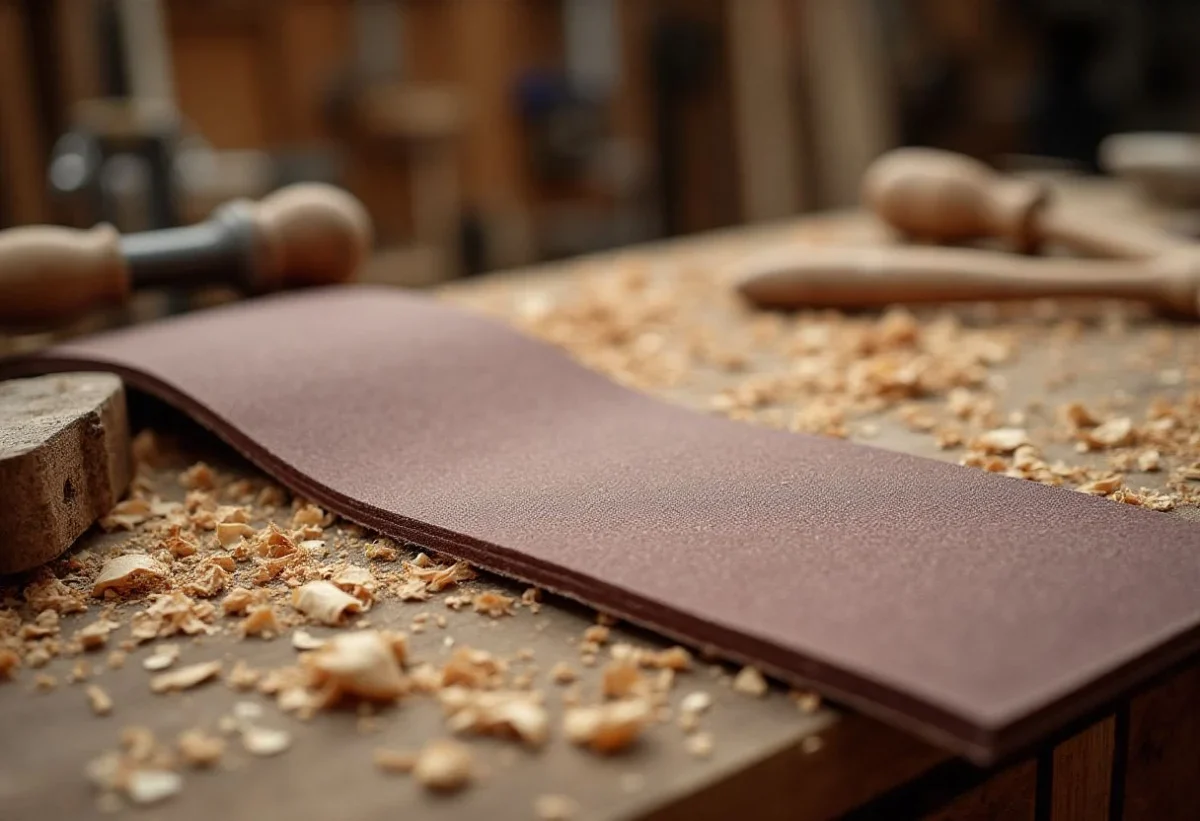
In the field of material work, the abrasive belt stands out as an essential tool. Used for sanding, polishing, and deburring, this gritty belt is at the heart of many manufacturing processes. Whether in the furniture, automotive, or cutlery industries, it ensures a perfect finish and enhances the quality of the final product. This roll coated with abrasive grains comes in various sizes and grits to meet the diverse needs of artisans and professionals.
The fundamentals of the abrasive belt
Abrasive belts are made from various materials that give them specific properties. This first technical aspect is crucial for choosing the belt suited to your needs.
- Materials used: abrasive belts are generally made from aluminum oxide, silicon carbide, or other synthetic materials. Each material has its particularities; for example, aluminum oxide is durable and versatile, while silicon carbide is ideal for sanding metals.
- Grain size: this determines the fineness of sanding or polishing. Coarser grains remove more material but leave a rough surface, while finer grains produce a smooth finish.
- Belt backing: the fabric or paper backing is also important, as it must be strong enough to hold the grains while remaining flexible to adapt to the shapes being worked on.
Applications and uses of abrasive belts
Abrasive belts find their place in various industrial sectors, each having its specific applications. Their versatility allows for working on a multitude of materials.
In the cutlery industry, for example, the abrasive belt allows for sharpening blades with unmatched precision. Carpentry workshops use them to smooth and shape wood, while in the automotive sector, they are used to prepare metal surfaces before painting. The proper use of these belts not only improves work efficiency but also enhances the durability of the finished products.
Choosing the right abrasive belt
Selecting the ideal abrasive belt requires considering several criteria to ensure an optimal result. The choice often depends on the ongoing project and the materials to be processed.
Start by identifying the type of material you will be working with. For metal, opt for robust belts like those made of silicon carbide. For wood, aluminum oxide may be more appropriate. Next, consider the desired finish; a fine-grit belt will be preferable for smooth surfaces. The backing of the belt should also match the curvature of the object to be polished, ensuring uniform application. A well-chosen belt not only reduces work time but also limits material waste.
Maintenance and durability of abrasive belts
The longevity of abrasive belts depends on their maintenance and correct use. A few practices can significantly extend their lifespan.
After each use, cleaning the abrasive belt removes accumulated particles that could affect its efficiency. Store them in a dry place to prevent moisture and degradation. It is recommended to regularly check the condition of the belts to detect any premature wear or damage. Good maintenance not only extends the use of the belt but also ensures consistent performance.
The abrasive belt is much more than just a sanding tool. Its diversity and adaptability make it a valuable asset in many industrial sectors. By wisely choosing the type of belt and ensuring proper maintenance, it is possible to significantly improve the quality and efficiency of your work.