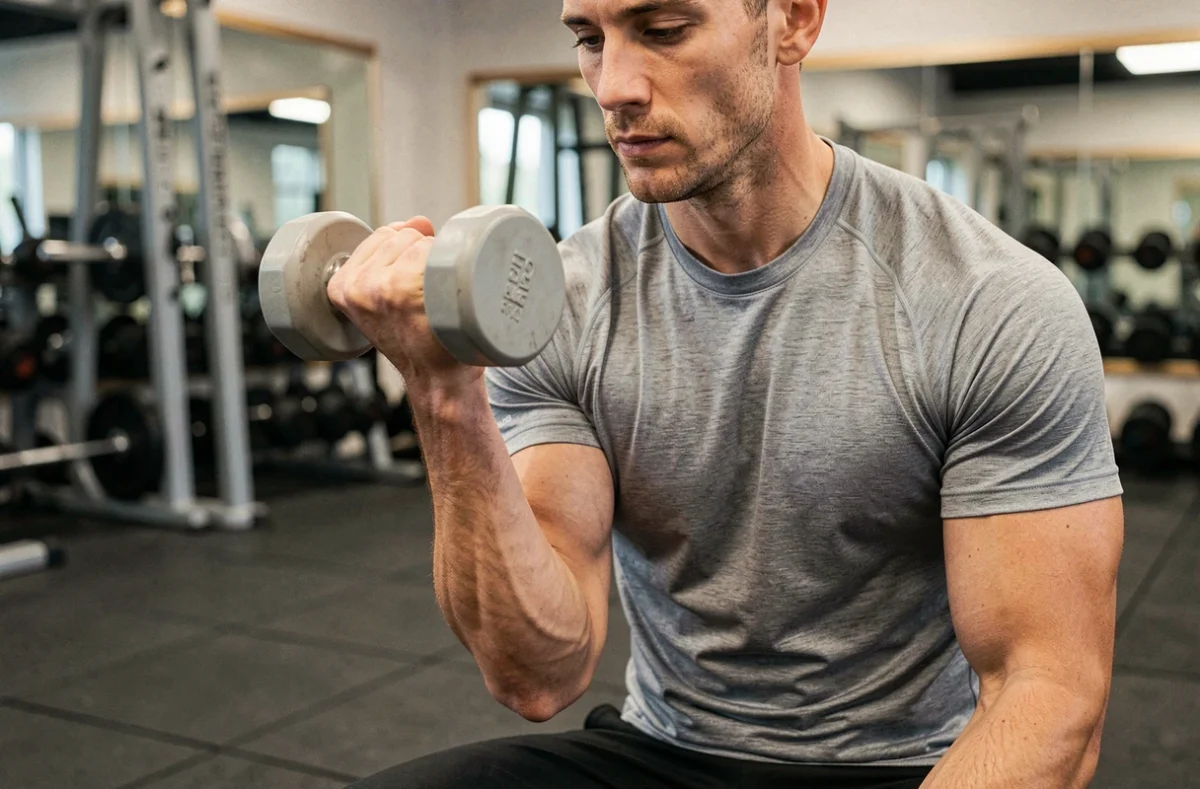
Wrist pronation and supination are two rotations of the forearm that change the position of the palm: facing down for pronation and facing up for supination. In strength training, these orientations change which muscles are recruited with each repetition. The range of rotation varies from person to person and depending on the task, making the idea of a universally suitable grip for every exercise untenable.
Muscle recruitment by grip: pronation, supination, and neutral grip
Choosing between pronation, supination, and a neutral grip is not a matter of aesthetic preference. Each position shifts the load to different muscle groups.
| Grip | Palm position | Primary muscles worked | Typical exercises |
|---|---|---|---|
| Pronation | Facing the floor | Brachialis, pronator teres, wrist extensors | Overhand pull-ups, reverse curls, barbell rows |
| Supination | Facing the ceiling | Biceps brachii (short and long heads), brachioradialis | Biceps curls, chin-ups, underhand upright rows |
| Neutral (hammer) | Thumbs pointing up | Brachioradialis, biceps brachii (long head), forearm muscles | Hammer curls, neutral-grip pull-ups, dumbbell rows |
In pronation, the biceps brachii works from a mechanically disadvantaged position: the radius crosses over the ulna, shortening the biceps’ lever arm. The brachialis and brachioradialis then take over as the primary drivers of elbow flexion.
In supination, the biceps regains a favorable lever arm. This is why the supinated curl remains the go-to exercise for targeting the biceps brachii.
The neutral grip is an intermediate option. It distributes the load between the brachioradialis and biceps while reducing stress on the wrist. To understand wrist pronation and supination, remember that the difference in muscle recruitment comes from the relative position of the radius and ulna, not simply the direction the palm faces.
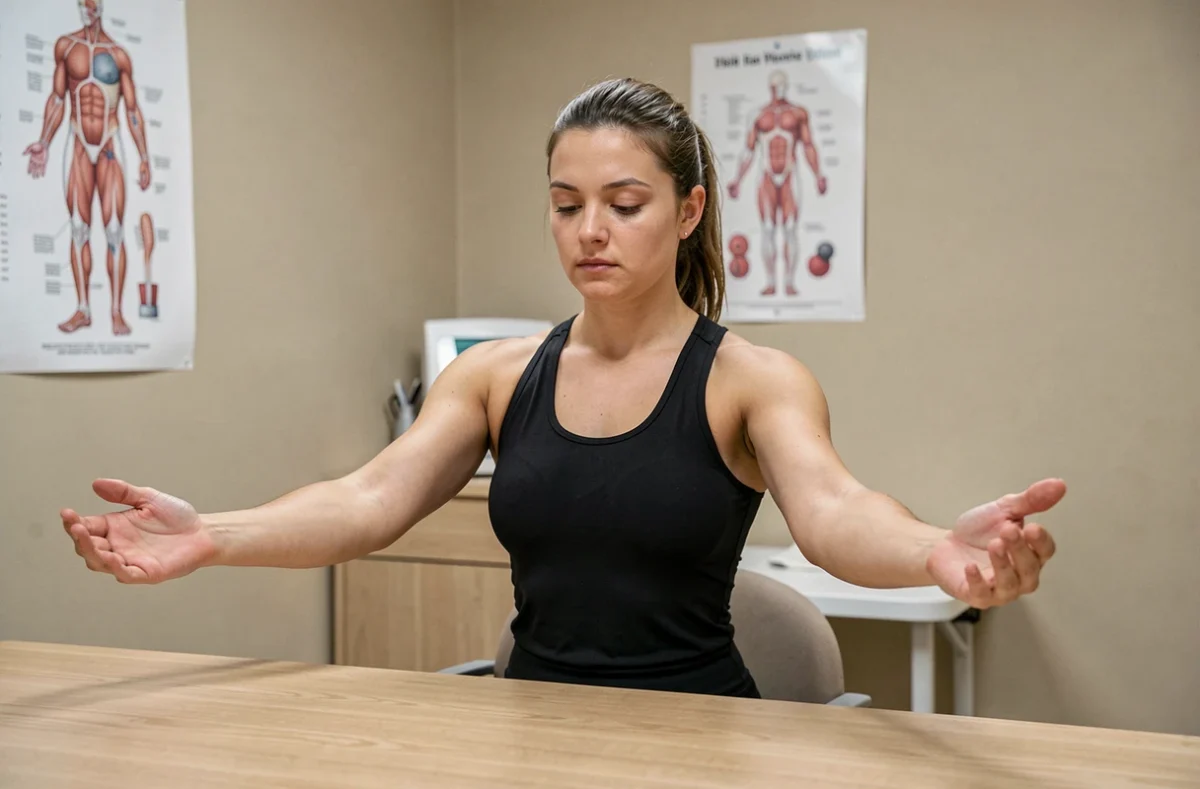
Forearm rotation and stress on the wrist joint
Strength-training content often presents pronation and supination as interchangeable grip variations. It rarely mentions that these rotations are also used to assess a painful wrist.
The clinical guide to triangular fibrocartilage complex (TFCC) injuries notes that painful or limited pronation or supination, as well as pain during resisted rotation, can be signs of a possible TFCC injury. This complex stabilizes the distal radioulnar joint, which is what allows the forearm to rotate.
In other words, discomfort that consistently appears when moving into pronation or supination during a curl, row, or pull-up is not necessarily just a sign that you need to warm up more. Reproducible pain during forearm rotation should prompt you to stop the exercise and seek an assessment from a healthcare professional.
Warning signs to watch for during training
- Pain on the ulnar (little-finger) side of the wrist when moving into pronation or supination under load, especially at the end of the range of motion
- A clicking or unstable sensation when rotating the forearm during pull-ups or an overhand-grip bench press
- A sudden loss of strength in supination during a movement you normally handle well, without an increase in load
- Localized swelling or persistent morning stiffness in the wrist after a session involving rotation
None of these signs alone is enough to make a diagnosis. If they occur repeatedly, get a clinical assessment before returning to exercises involving pronation and supination.
Adjusting your grip to your athletic goals and individual tolerance
The range of forearm rotation varies depending on the task and from person to person. A study of everyday activities found notable individual differences in the range of pronation and supination used. Although these findings relate to daily tasks rather than athletic performance, they suggest that no single position should be considered universally suitable.
In practice, this means that forcing full pronation or supination under load is not always appropriate. Some people have limited supination due to stiffness in the interosseous membrane or a history of fracture. For them, a neutral grip offers a functional compromise without sacrificing training intensity.
Returning to sport after a wrist injury
After a scaphoid fracture, a rehabilitation guide for basketball players recommends basing the return to play on bone healing, absence of pain, strength, load tolerance, and the ability to reproduce sport-specific movements. Using strength or range of motion close to that of the opposite side as a benchmark is practical, but it is not a universal rule.
The WISE trial program, designed for rehabilitation after a wrist fracture, includes a neutral-position option for exercises that are difficult to perform in pronation or supination. This confirms that a neutral grip is not just an easier option, but a recognized clinical adaptation.
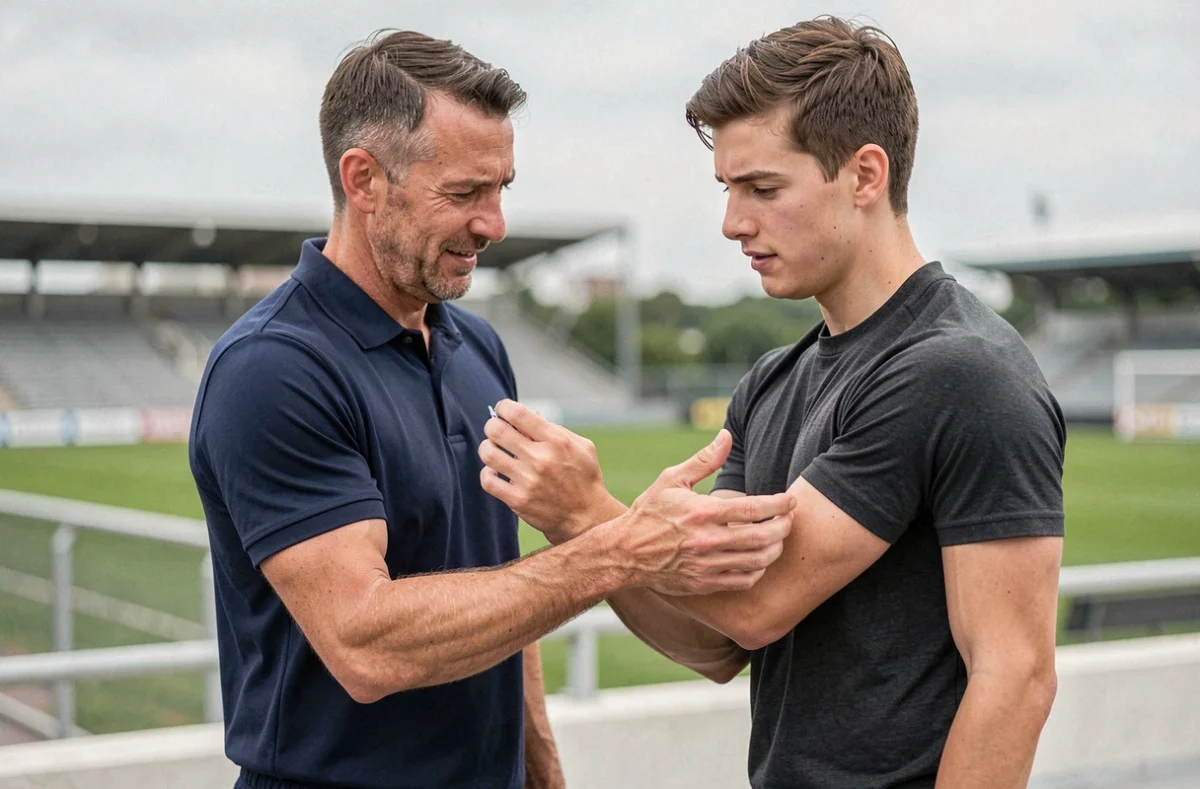
Progressive loading and forearm rotation: what rehabilitation can teach us about training
Clinical guidance recommends progressively adjusting load, volume, frequency, and recovery before gradually reintroducing the target activity. The same source emphasizes that general wrist exercises are no substitute for progressively training the specific activity.
This approach applies directly to strength training. Increasing the load in pronation without first building joint tolerance puts the wrist at risk. A heavy reverse curl, for example, places the wrist in full pronation under tension, putting considerable stress on the distal radioulnar joint.
Progression can follow a simple pattern: start with a neutral grip and a moderate load, add partial pronation and supination rotations without weight, then gradually increase resistance while monitoring the joint’s response. This approach reduces the risk of overloading a ligament complex that has not been prepared for it.
The difference between a grip choice and a joint warning sign comes down to reproducibility. Choosing a neutral grip because it better targets the brachioradialis is a training preference. Pain that returns with every rotation under load is a clinical warning sign, not a technique issue.