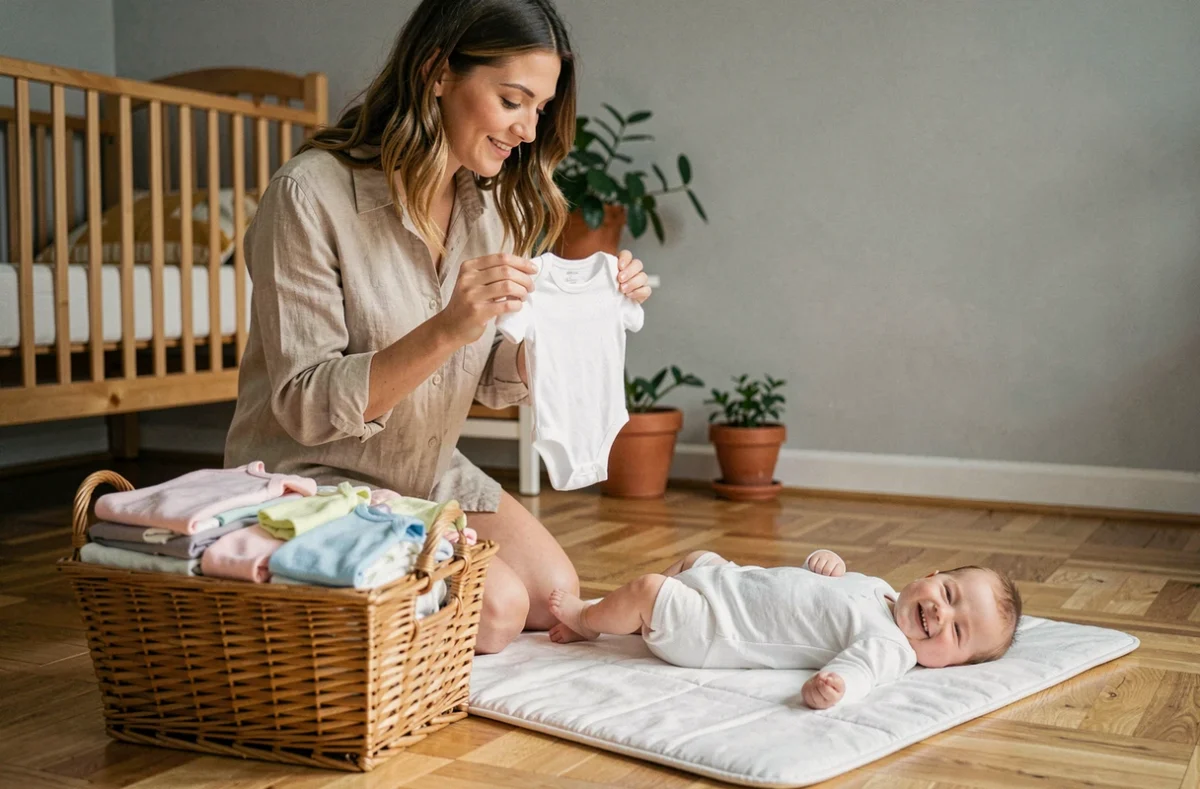
The sizes shown on baby clothes rarely correspond to a child’s actual age. A one-month-old may easily wear 3-month clothing, while a 4-month-old may fit into 9-month clothing. The reason is simple: height in centimeters matters more than age when choosing the right size. Understanding this mismatch helps you buy less, choose better, and shop at the right time.
Height and weight: the two reliable guides to choosing a size
Most parents rely on the age printed on the label. This is only a rough guide. A full-term baby who is larger than average may outgrow newborn size before even leaving the maternity ward.
The most reliable criterion is height, meaning the baby’s length measured from head to toe. Brands such as Petit Bateau even list baby sizes directly by height in centimeters rather than by age in months. Weight provides an additional guide, especially for bodysuits and pajamas that fit snugly around the tummy and thighs.
It’s helpful to check how long baby clothes are worn based on these measurements rather than relying on a single size chart.
| Label size | Approximate height | Approximate weight |
|---|---|---|
| Newborn | Up to 50 cm | 2.5 to 3.3 kg |
| 1 month | Up to 54 cm | 3.3 to 4 kg |
| 3 months | Up to 60 cm | 4 to 6 kg |
| 6 months | Up to 67 cm | 6 to 8 kg |
| 9 months | Up to 71 cm | 8 to 9 kg |
| 12 months | Up to 74 cm | 9 to 10 kg |
This chart is only a guide. Size ranges vary from one brand to another, sometimes significantly: there is no universal standard across manufacturers. Checking each brand’s own size guide can help you avoid unpleasant surprises.
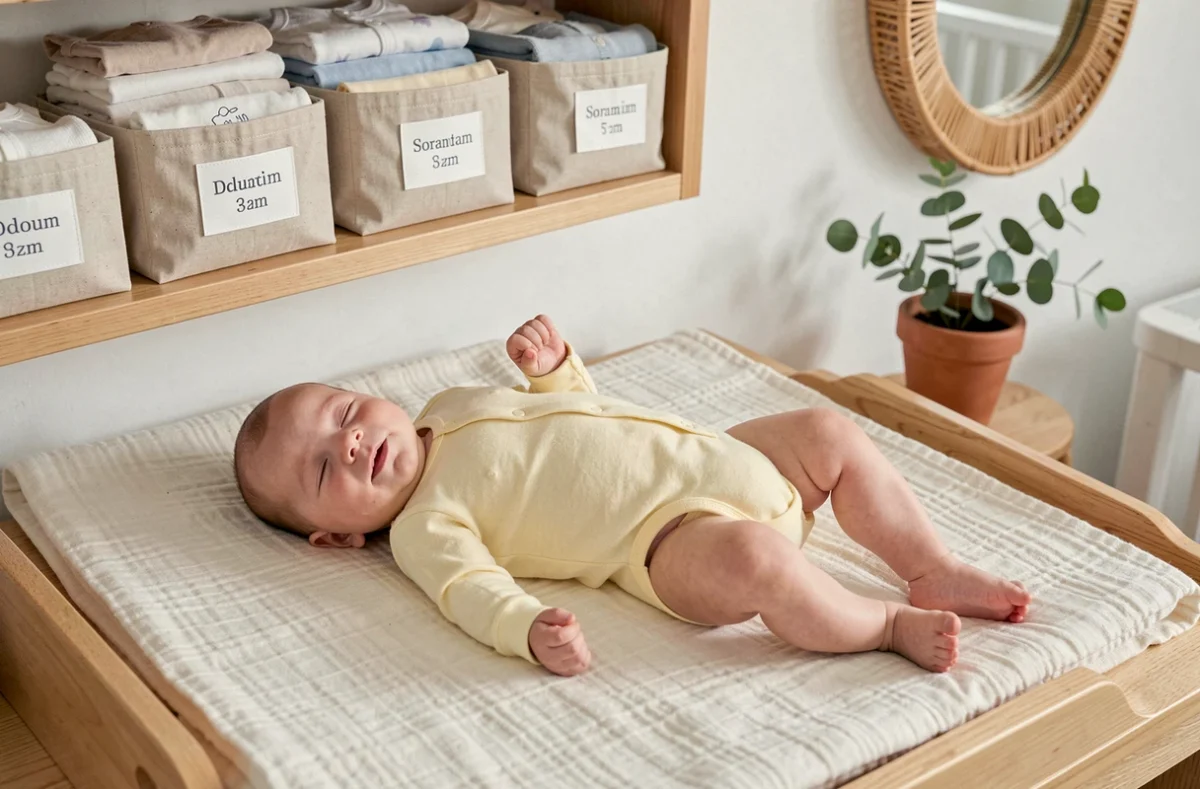
Why how long clothes fit varies so much from one baby to another
Two babies of the same age may wear sizes that are two sizes apart. Several factors explain this difference, and none of them is unusual.
Growth happens at an uneven pace
Babies don’t grow at a steady rate. During the first few weeks, they grow quickly in both height and weight, then growth gradually slows after the third month. WHO growth charts show that tracking growth over time matters more than a single measurement.
A baby may stay in one size for three weeks, then suddenly outgrow it in just a few days during a growth spurt. These spurts are unpredictable, making any universal timeline misleading.
Build matters just as much as length
A long, slim baby may wear the same 3-month bodysuit for several weeks without any problem. A stockier baby with fuller thighs may need to move up a size sooner, even if their height still matches the current size.
Footed pajamas are often the first clothes to become too small: the overall length (torso plus legs) leaves less room than a bodysuit.
Clear signs that baby clothes have become too small
Rather than counting the weeks, it’s better to check how the clothes fit your child. Some signs are hard to miss:
- The bodysuit snaps at the crotch feel tight or come undone easily, suggesting the garment is pulling lengthwise.
- The feet of the pajamas are compressed or the toes curl up at the end, restricting movement and comfort.
- The sleeves stop above the wrists and the fabric bunches at the shoulders, indicating that the garment is too small across the shoulders.
- The waistband is so tight that it leaves red marks on the skin after the clothes are taken off.
As soon as any of these signs appear, move up to the next size, even if your baby hasn’t reached the age shown on the label. Clothes that are too tight restrict a baby’s movement and can disrupt their sleep.
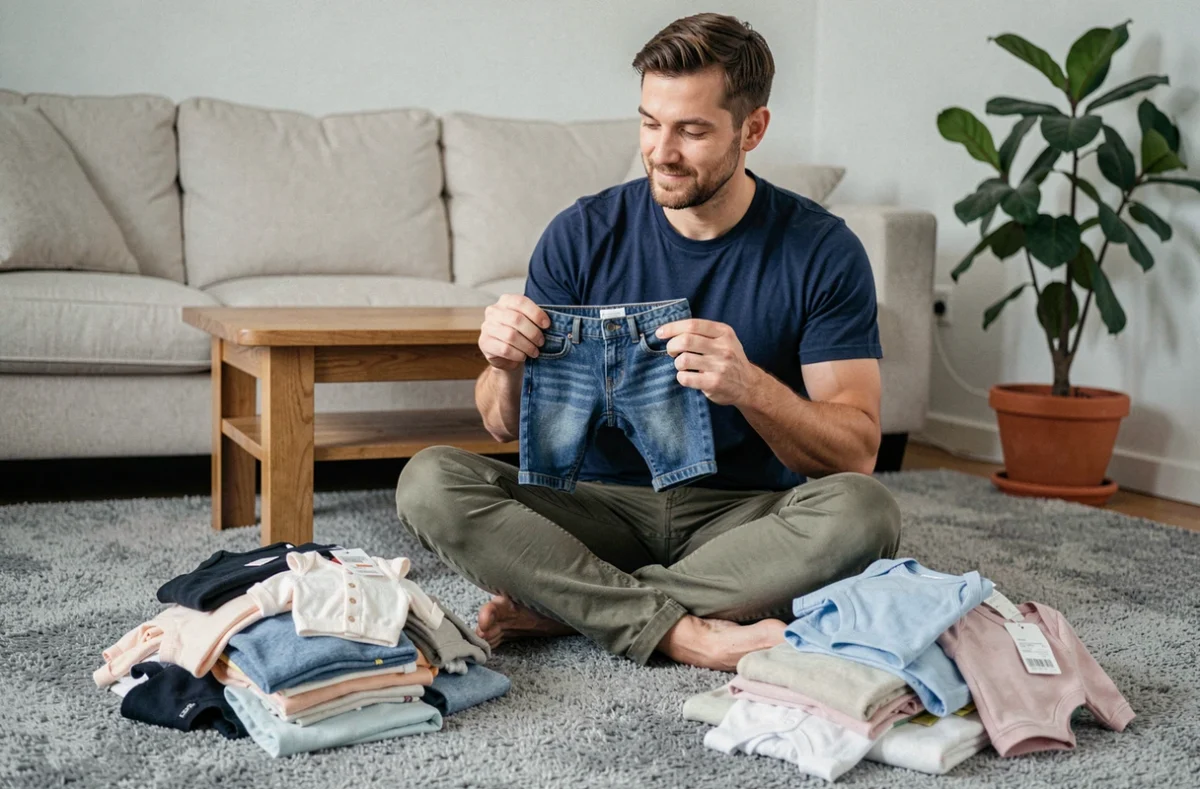
Shop smart: keep your stock per size to a minimum
A common mistake is to build a complete wardrobe in every size. In reality, newborn and 1-month sizes are often worn for only a few weeks—or not at all by babies who are larger at birth.
How many clothes to have in each size
A small stock is enough for newborn and 1-month sizes. Four to six bodysuits and three to four pairs of pajamas should cover your needs if you do laundry regularly. From 3 months onward, clothes tend to fit for longer, so it makes sense to have a slightly larger stock.
One often-overlooked factor is the season. A baby born in June will be wearing 6-month clothes in winter. Buying short-sleeved 6-month bodysuits for this baby would be pointless. Matching the size to the season when the clothes will actually be worn helps avoid unnecessary spending.
Secondhand clothes: a practical option
Since each size is often worn for only a few weeks, baby clothes are usually still in good condition after use. Oxfam notes that reusing a garment extends its lifespan and reduces the impact associated with making new clothes. Cotton bodysuits and pajamas hold up well to repeated washing and keep their shape.
Selling or giving away outgrown sizes frees up space and helps pay for the next size. The buy-and-resell cycle is especially useful for sizes that last less than a month.
Differences between brands: a factor not to underestimate
A 6-month size from one brand won’t fit the same measurements as a 6-month size from another. Cuts vary in width, leg length, and fabric stretch. Bamboo or stretchy jersey clothes generally offer more room than tightly woven cotton.
Before buying in bulk or online, checking the manufacturer’s size guide (in centimeters) is still the safest approach. Clothes that are slightly too big are always better than clothes that are too tight: your baby will wear them for longer and feel more comfortable in them.
Baby clothing sizes don’t follow a fixed schedule. Checking your child’s height and weight—and, above all, how comfortable they are in their clothes—is a far more reliable guide than the age printed on the label. Keeping a reasonable stock in each size, choosing stretchy fabrics, and moving up a size at the first signs of discomfort are the three habits that help prevent both waste and discomfort.