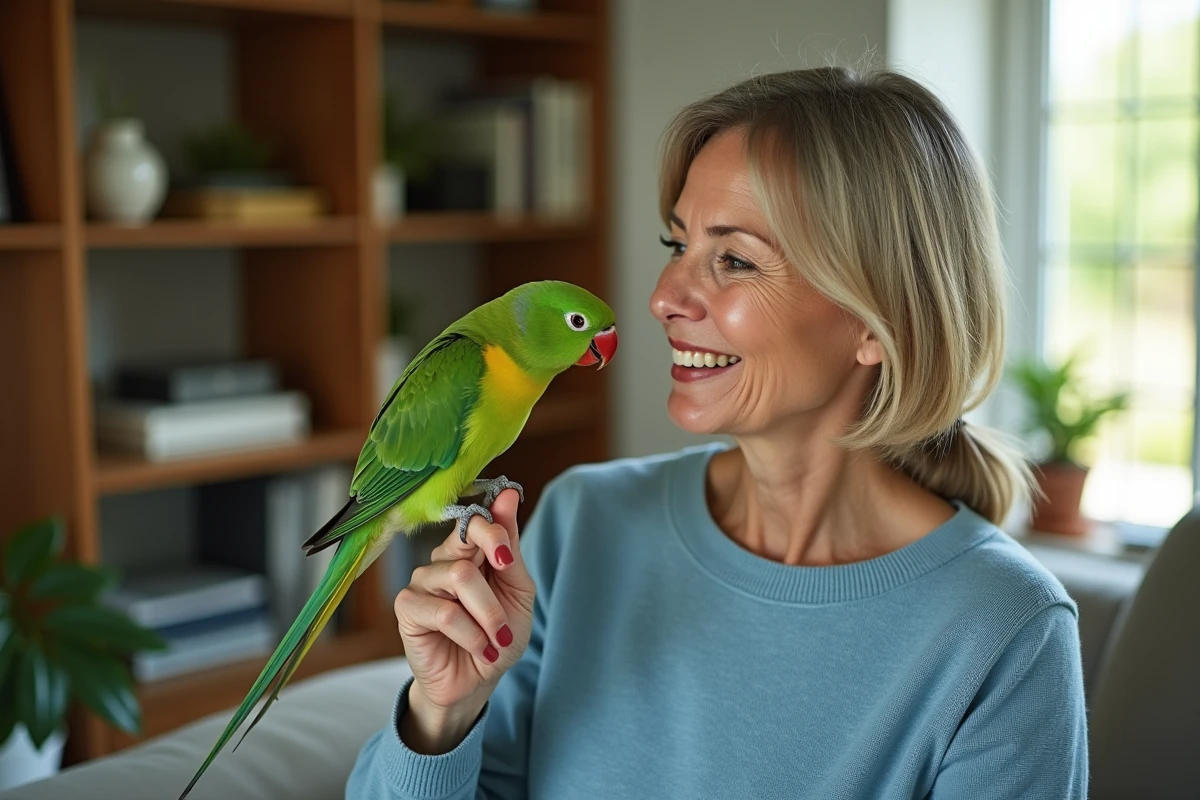
Forget everything you think you know about chatty parrots: the kakariki does not follow the expected script. This small colorful bird, often chosen for its liveliness, does not impose itself in the realm of human speech. The facts are clear: despite its place in the large family of Psittacidae, where some cousins excel in imitation, it prefers to explore other modes of expression. A few rare individuals surprise with a syllable or two, but these are exceptions, never the rule. Studies and feedback from breeders emphasize: each kakariki is different, and the rare vocal feats can mainly be explained by context, training, and the unique personality of the bird.
The kakariki, a parrot with a unique personality
It’s hard to confuse the kakariki with another parrot. Native to New Zealand, sometimes spotted on Norfolk Island or in New Caledonia, it leaves a lasting impression with its plumage that is as bright as it is distinctive: bright green with a vivid red crown for the Cyanoramphus novaezelandiae, bright yellow for the Cyanoramphus auriceps. Its slender silhouette, extended by a long tail, highlights its energy and overflowing curiosity.
But it is especially its behavior that captures attention. The kakariki does not stay still: it observes, jumps, and explores everything around it. A true jack-of-all-trades, it needs challenges to stay fit. Providing a generous space, regularly renewing its toys, allowing it to bathe—all contribute to the vitality of this little acrobat. Neglecting these needs risks extinguishing its dynamism. Its balance also relies on meticulous care, a varied diet, and attentive veterinary follow-up.
Sexual dimorphism is only visible to the trained eye: the male has a sturdier build, a slightly wider beak. For the rest, there are many color mutations, Cinnamon, Fallow, Spotted, Turquoise, Mottled. However, it is important not to cross yellow-fronted kakarikis with red-fronted ones to preserve the original variety. A kakariki can share its owner’s life for 6 to 20 years, provided it receives constant attention and stimulation.
For those eager to explore in detail the world of this unique bird, the specifics of the kakariki on British & Co offer an accurate look at its temperament, breeding conditions, and often overestimated vocal abilities.
Can it really talk? The findings of experts and enthusiasts
The kakariki fascinates, especially for its improvisational talents rather than its voice. Those who hope to converse every morning with a loquacious parakeet may be disappointed: the kakariki lacks the vocal power and flexibility of the African grey. Admittedly, some specimens occasionally utter two or three words, but the vast majority prefer to multiply sounds: whistles, small cries, and all kinds of babbling make up its own language.
From the breeders’ side, the message is clear: wanting to turn a kakariki into a natural imitator requires incredible patience and a high tolerance for frustration. A few repeated words, a small foreign phrase, that is more the exception than the rule. The bird favors spontaneous expression: few parrots display as much inventiveness in their daily songs and vocalizations. It is better to welcome these manifestations as a unique performance, without expecting it to chatter like an Amazon.
Several criteria remain crucial if one hopes for any semblance of imitation. A lively environment with human faces, regular vocal exchanges, and genuine daily interaction: these ingredients matter. That said, even with all these conditions met, one thing is guaranteed: the bird will rarely become an accomplished imitator. Clear speech remains a rarity in the kakariki, more influenced by the intimate relationship established than by an innate ability.
How to stimulate your kakariki’s speech? Tips to follow and natural limits
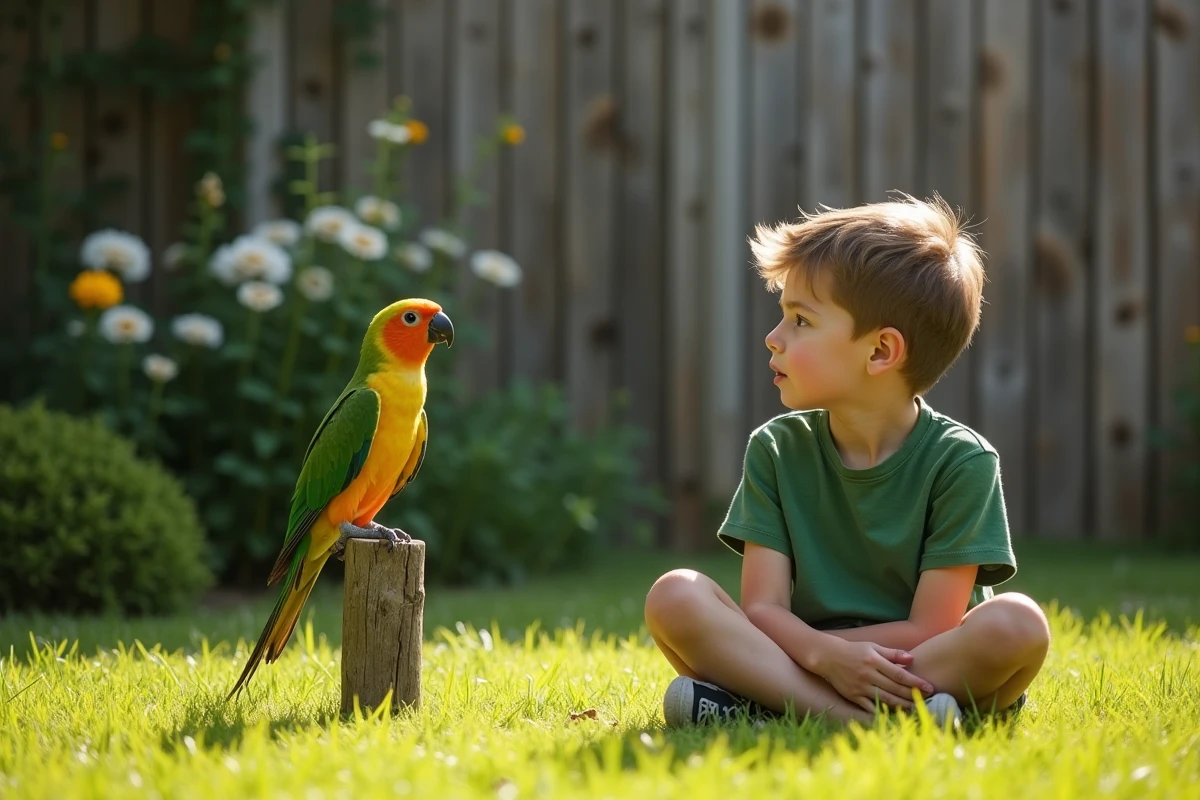
Can you help your kakariki try its hand at speech? Up to a certain point. Ultimately, everything relies on stimulation and the quality of the bond. When it grows up with attentive humans, in an atmosphere rich in verbal interactions, the kakariki gets used to listening, imitating… sometimes. The ideal is to choose short words, repeated in a positive and relaxed context. It is this daily routine, predictable and encouraging, that makes it want to reproduce what it hears. Associating a word with an emotion or a reward increases the chances of getting a reaction, without forcing anything.
Here are some practices to implement to encourage potential repetition:
- Introduce short words daily during quiet moments and prioritize regular repetition.
- Feel free to adapt your method to the bird’s personality: progress varies from one individual to another.
- Maintain a peaceful environment, keeping away anything that could produce stress in the room.
Adding to this the diversity of toys, the opportunity to exercise in a large aviary, the chance to take baths, and the kakariki expresses all its liveliness. It certainly learns a lot, but speech will never become its preferred mode of expression. The few sounds heard here and there will remain the exception, not the norm.
Ultimately, the magic of the kakariki does not lie in ten repeated words, but in its communicative energy, its mischief, and the intensity of its daily presence. If it surprises you one morning with an unexpected syllable, it is a unique wink. But the attachment and complicity that develop do not depend on any spoken repertoire. That is the true talent of this companion who is not quite like the others.