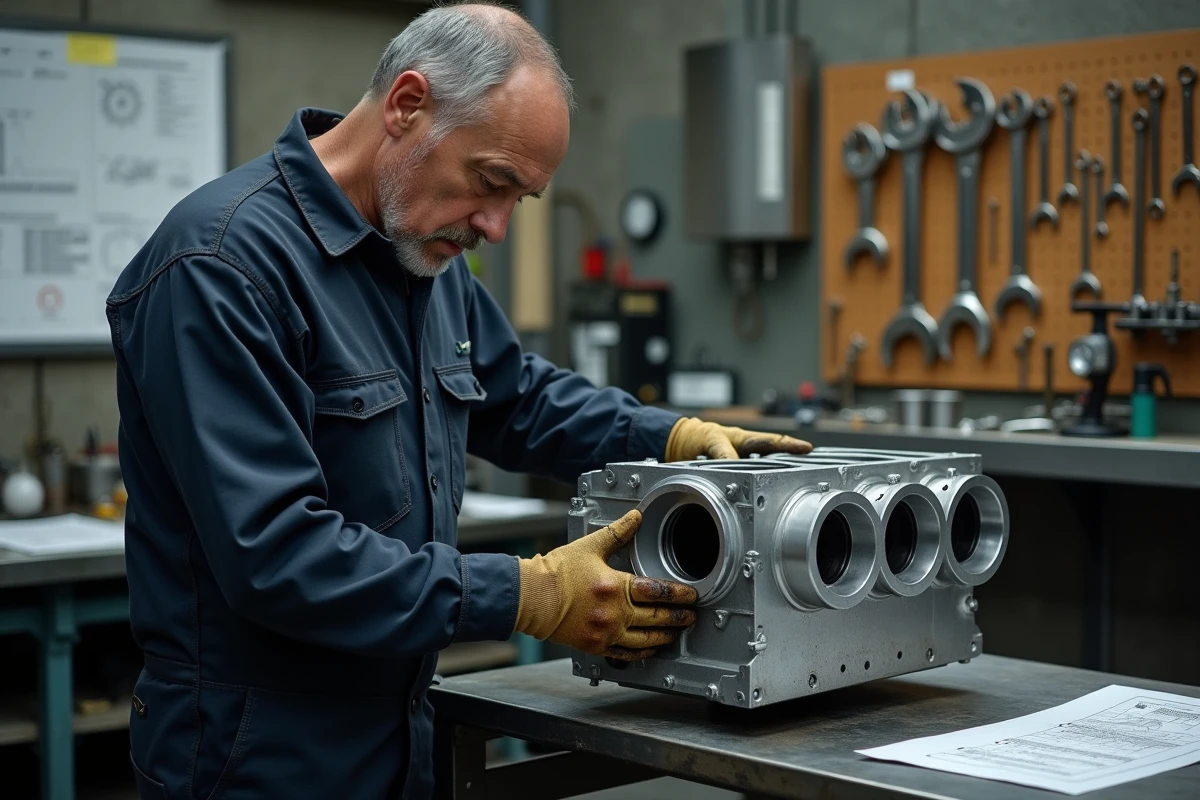
Does a forged engine withstand better than a standard engine, or is the gain limited to certain specific configurations? The answer depends less on the material itself than on the sizing of the forged parts in relation to the actual stresses of the engine. Comparing forged and cast components based on measurable criteria allows us to rephrase the question: at what level of stress does the extra cost of a forged engine become justified?
Forged components and cast components: what mechanical properties reveal
Forging involves compressing a block of steel or aluminum under high pressure to align the granular structure of the metal. Casting, on the other hand, pours molten metal into a mold. This difference in process directly affects the strength of the parts.
| Criterion | Forged part (pistons, connecting rods, crankshaft) | Casted part (series) |
|---|---|---|
| Granular structure | Fibers aligned in the direction of stress | Random grains, possible micro-porosities |
| Fatigue resistance | Significantly higher at high speeds | Sufficient for standard use |
| Heat tolerance | Retention of properties under high thermal load | Possible deformation beyond series limits |
| Weight | Possible reduction through precision machining | Mass dictated by the mold |
| Cost | Significantly higher (unit machining) | Economical mass production |
The alignment of metallic fibers explains why forged parts withstand more pressure and heat without premature deformation. For a standard vehicle operating at nominal power, this additional margin remains untapped.
To learn everything about the forged engine, one must distinguish the material from the overall tuning: a poorly calibrated forged assembly for boost pressure or the intended speed can remain fragile despite the quality of the components.
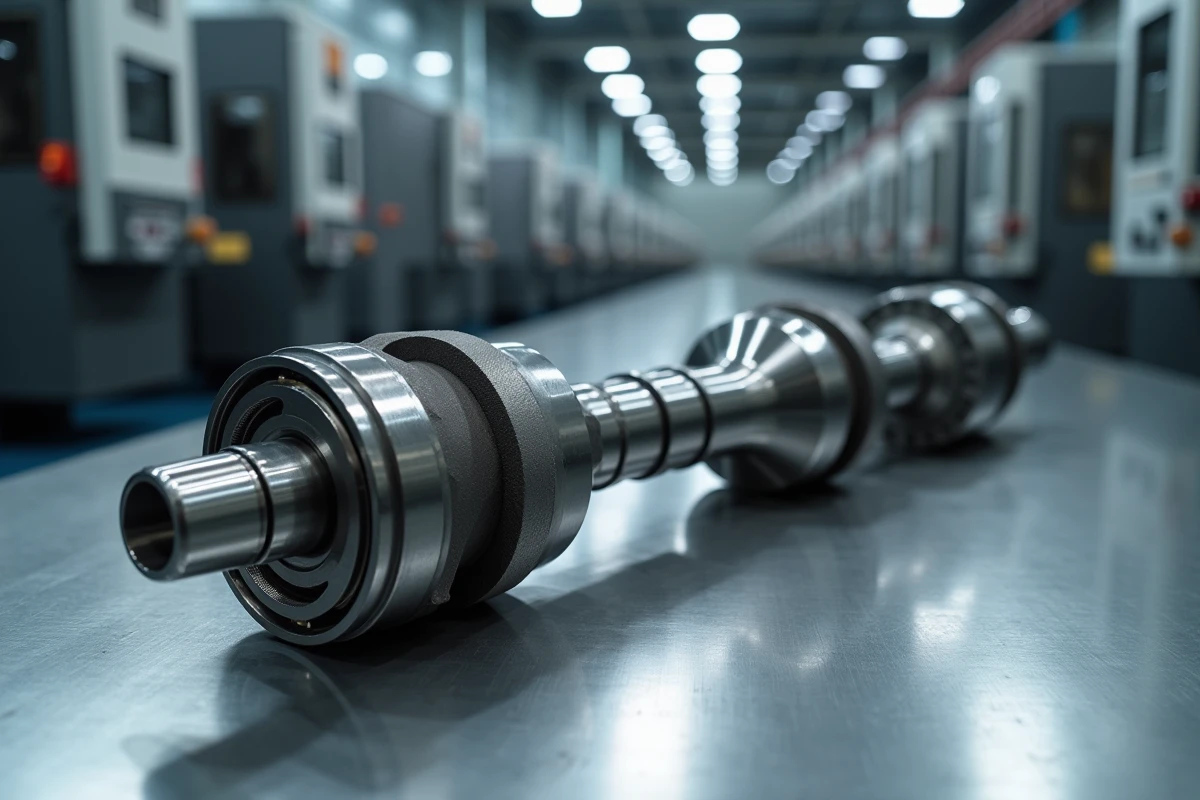
Forged engine in road, track, or light tuning use: where is the limit
The real gain of a forged engine does not translate into an automatic increase in power. It is measured in tolerance to extreme stresses: increased boost pressure, prolonged speeds beyond the standard red zone, combustion temperatures raised by a more aggressive mixture.
Everyday road use
On a non-reprogrammed standard car, the original cast aluminum pistons and connecting rods support the loads intended by the manufacturer. Installing forged parts in this context provides no measurable benefit in performance or durability. The extra cost (parts, machining, labor for installation) does not compensate for anything.
Light tuning with reprogramming
A reprogrammed engine that moderately increases boost pressure often remains within the safety margin of standard components. The switch to forged becomes relevant when power significantly exceeds original specifications, typically beyond the threshold where the manufacturer sized its cast parts.
At this stage, forged steel connecting rods and forged aluminum pistons absorb pressure spikes without risk of deformation. However, the rest of the drivetrain (gearbox, clutch, transmission) must also be adapted; otherwise, the weak point simply shifts.
Track use and competition
On the track, sustained speeds and repeated thermal cycles stress each component beyond what a standard cast part can tolerate. Forged becomes a functional prerequisite, not a luxury. Forged crankshafts, subjected to heat treatment and sometimes pre-stress shot peening, gain fatigue and wear resistance over time.
Real constraints of a forged engine: noise, maintenance, and tuning
Online content often describes the advantages of forged parts without detailing the concrete compromises in daily use. These compromises exist and weigh in the decision.
- Increased mechanical noise on cold start: forged aluminum pistons have a wider operating clearance than cast pistons, as their thermal expansion differs. This knocking disappears at temperature, but it can be surprising in civilian use.
- More demanding maintenance: an engine prepared with forged components requires shorter oil change intervals and oil suited to the tight tolerances of precisely machined bearings.
- Mandatory tuning: installing forged parts without recalibrating injection, ignition, and boost management is like reinforcing a link without adjusting the chain. The sizing of the whole is as important as the material.
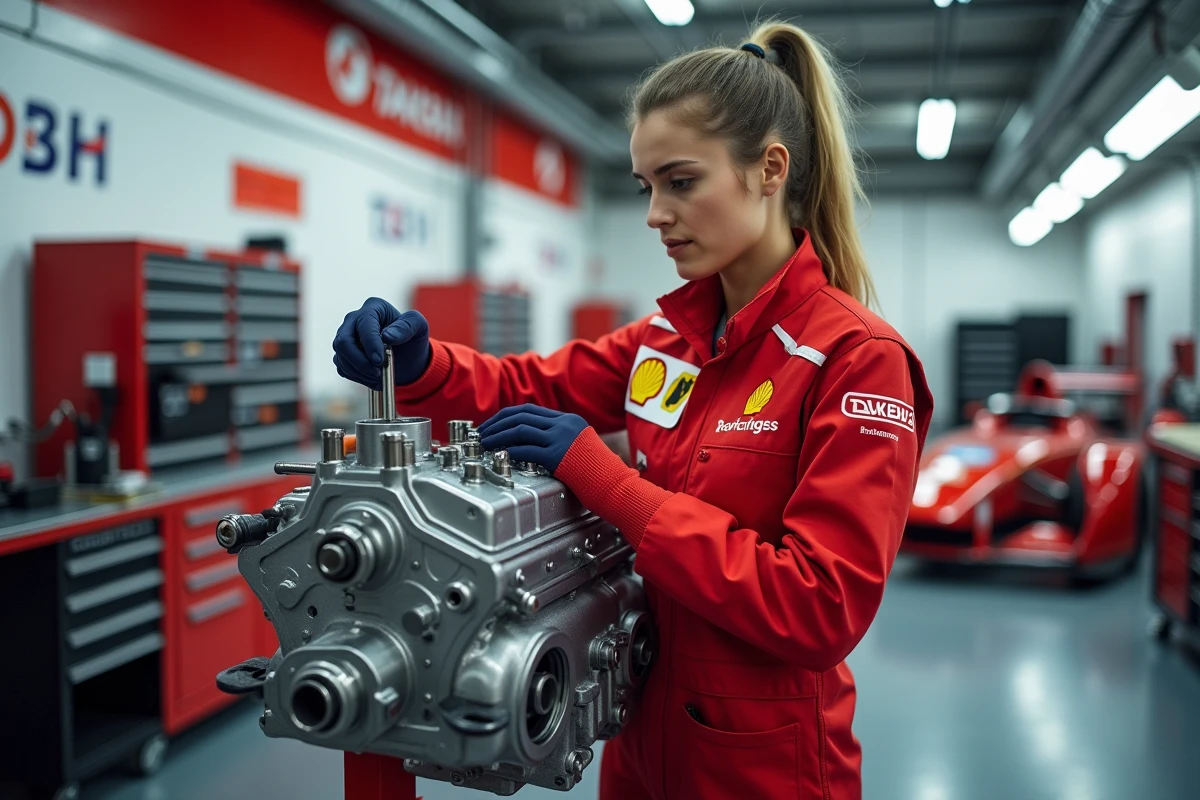
Durability of forged parts: steel or aluminum depending on the function
The choice of forged metal depends on the part in question. Connecting rods and crankshafts are generally forged in steel to maximize tensile and torsional strength. Pistons, on the other hand, remain in forged aluminum: this material combines lightness and good thermal conductivity, which limits heat accumulation in the combustion chamber.
A forged aluminum piston dissipates heat better than a cast piston, which protects the rings and oil film at high speeds. Conversely, a forged steel crankshaft withstands the torsional stresses generated by large displacements or high boost levels.
The final durability depends on the coherence of the whole. An engine with only forged pistons, paired with original cast connecting rods, shifts the breaking point without eliminating it. The reliability of a forged engine relies on the overall sizing, not on a single reinforced part.
The forged engine is therefore not a universal improvement. Its relevance is measured by the actual stress level that the powertrain endures. Below the threshold where standard parts reach their limits, forged remains an investment without measurable return. Beyond this threshold, it becomes the condition for the engine to survive the stresses imposed on it.